

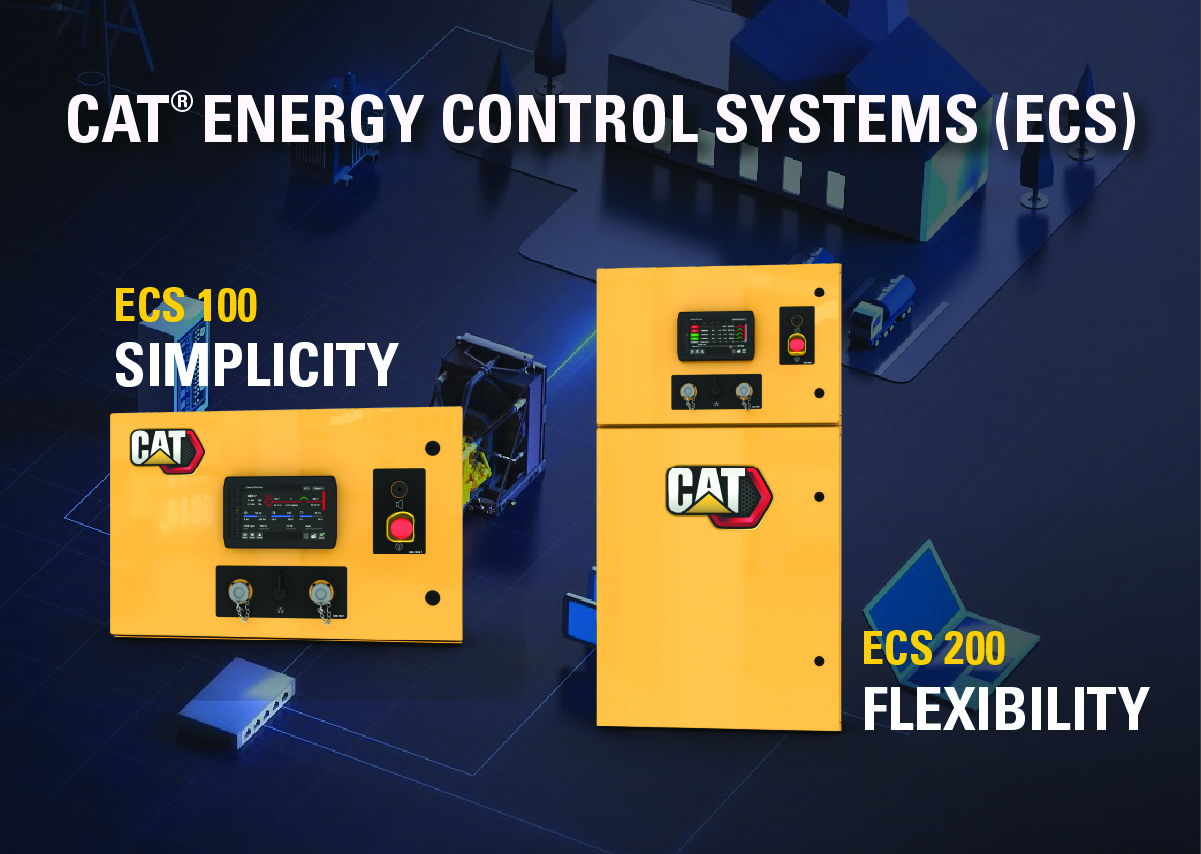
When specifying a generator system, most discussions focus on engine size, fuel type, or redundancy strategy. Control architecture is often treated as a secondary consideration. In reality, it has a direct impact on system reliability, scalability, and long-term operating cost. Understanding the difference between single-genset control and paralleling control is therefore critical during early planning.
Why one control system does not fit all applications
A common misconception is that all generator controllers perform the same role. While basic functions such as start, stop, and protection are universal, requirements change quickly as uptime expectations rise, multiple generators are introduced, or future expansion is anticipated. Selecting an unsuitable control architecture early can limit flexibility later and may lead to unnecessary system redesign or retrofit costs.
What Cat ECS 100 is designed to do
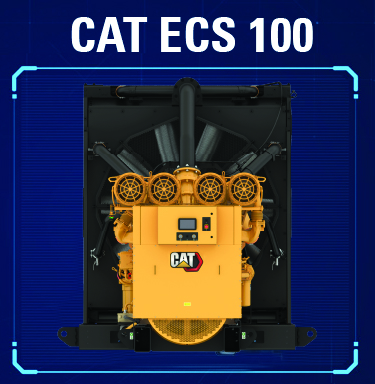
The Cat ECS 100 is designed for single-generator applications, operating either in island mode or as standby power. Typical use cases include commercial buildings, small industrial facilities, water treatment plants, and remote sites that rely on one primary genset.
At this level, the controller manages engine and generator protection, automatic mains failure, voltage regulation, and system monitoring through an integrated touchscreen interface. The advantage lies in simplicity. Fewer external components are required, wiring complexity is reduced, and operators benefit from a clear, graphical view of system status and alarms.
That same simplicity also defines its boundary. On its own, the Cat ECS 100 is not intended to manage load sharing or synchronisation across multiple generators.
When the Cat ECS 200 becomes the right choice
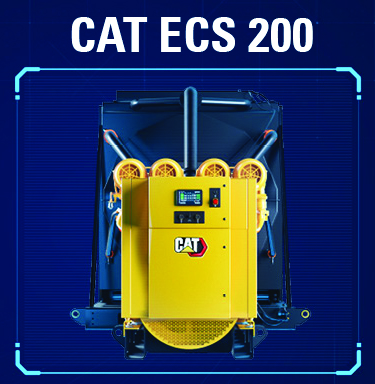
The Cat ECS 200 builds on the ECS 100 platform by adding paralleling capability. Rather than controlling a single genset in isolation, it coordinates multiple generators operating together. This is essential for applications where total load exceeds the capacity of one unit, or where redundancy and uptime are critical.
Data centres, hospitals, utility island grids, and large industrial plants that run on prime-rated generators are common examples. In these environments, generators must synchronise, share load proportionally, and respond dynamically to changing demand.
The Cat ECS 200 supports this through a modular architecture that enables sites to expand from a single generator to a multi-genset system as requirements evolve.
Planning beyond today’s load
Modern power systems are increasingly shaped by regulatory compliance, digital monitoring, and future energy strategies. Standards such as UL 2200 and NFPA 110, together with emerging grid-interaction and microgrid use cases, are encouraging facility owners to think beyond immediate needs.
A key advantage of the Cat ECS platform is its modular and upgradeable design. Sites can begin with Cat ECS 100 and later upgrade to Cat ECS 200 by adding hardware and software updates. This approach allows facilities to remain future-ready without replacing the entire control system, making it a practical option for sites with phased expansion plans.
Cat ECS 100 and Cat ECS 200 support different stages of system maturity. Choosing the right control architecture early helps balance reliability, cost, and long-term flexibility, while reducing the risk of disruptive upgrades as power requirements change.
Contact your Tractors Singapore Electric Power team to discuss on your next project.


